
A recent breach appears to confirm long‑standing suspicions among artists and record labels: AI music platforms may be quietly training their systems on massive libraries of human‑made songs.
For years, musicians and industry groups have argued that AI music generators rely heavily on copyrighted catalogs to build their models. Now, new evidence sheds light on how Suno, a fast‑growing AI music tool, developed its audio‑generation technology.
A Hack Exposes Suno’s Training Data Sources
According to a report, a hacker known as ellie.191 infiltrated Suno’s systems in late 2025 using a supply‑chain attack vector. The leaked screenshots and internal files reveal extensive datasets used to train Suno’s AI models during 2023 and 2024.
One folder labeled “youtube_music” contained more than 2 million audio clips. Additional files included:
- 17,000+ hours of music sourced from Genius HQ
- 12,000+ hours from Deezer
- 62,000+ hours from Pond5, a Shutterstock‑owned stock music library
The hacker also accessed customer records and payment information stored by Stripe, Suno’s payment processor.
Suno admitted that the breach involved outdated code, claimed no sensitive personal data was exposed, and stated it does not store full credit card numbers. The company said current privacy laws did not require notifying individual users.
A Rare Look Inside AI Music Systems
Suno has become widely known thanks to viral AI‑generated songs created from simple text prompts, including the trend of turning text message exchanges into music.
Although the leaked code is no longer active, it offers an unusually transparent look into the typically secretive world of generative AI development. It also appears to support allegations made in ongoing copyright lawsuits against Suno.
Major record labels, Universal Music Group, Sony Music Entertainment, and Warner Music Group argue that Suno trained its models on copyrighted songs without permission or proper licensing.
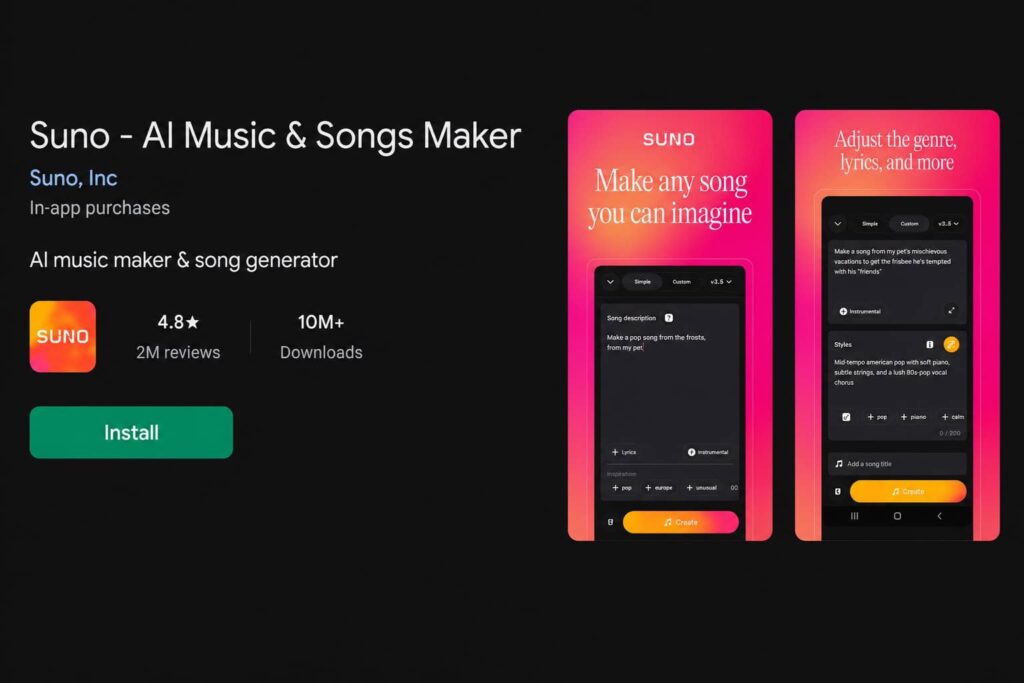
Suno, like many AI companies, insists its training practices fall under fair use, citing recent legal wins by Anthropic and Meta in similar cases.
A source close to the litigation mentioned that the leak does not introduce “materially new” information, noting that Suno has publicly disclosed its training approach.
On its website, Suno states that its models are trained on publicly available music files and metadata accessible on third‑party sites.
The Creative Industry at a Crossroads
These lawsuits highlight the growing tension between tech companies and human creators. AI firms argue they are expanding creative possibilities and democratizing access. Artists counter that AI systems exploit their work to produce low‑cost imitations, often referred to as “AI slop” that companies use to cut jobs.
Some rightsholders and publishers have opted to strike deals with AI platforms. AI platforms like Suno have also introduced guardrails to prevent deepfakes or direct imitation of specific artists. For example, users won’t be able to prompt Suno to write “a pop song like Taylor Swift,” for instance.
Still, many musicians remain unconvinced. Even when labels reach agreements with AI companies, such as UMG’s settlement with Suno in a separate case, artists say they have not received compensation for the use of their music.